
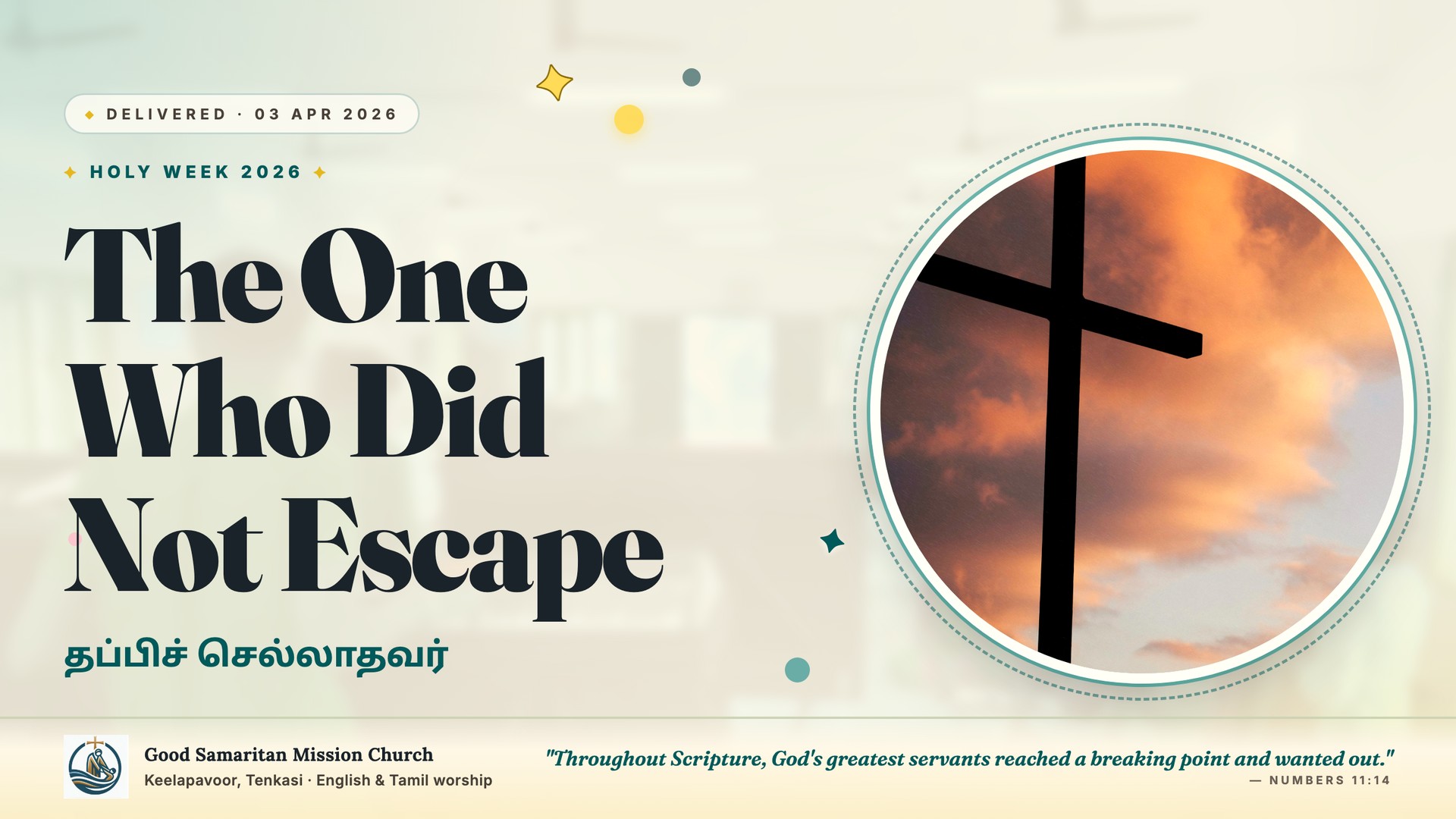
 Holy Week 2026
The One Who Did Not Escape
தப்பிச் செல்லாதவர்
Throughout Scripture, God's greatest servants reached a breaking point and wanted out. But Jesus - the only person who had every reason and every ability to escape - chose not to. He submitted in the same breath.
வேதாகமம் முழுவதும், தேவனுடைய மிகச்சிறந்த ஊழியர்கள் ஒரு முறிவுப் புள்ளியை அடைந்து வெளியேற விரும்பினார்கள். ஆனால் இயேசு - தப்பிச் செல்வதற்கான எல்லா காரணங்களும் திறன்களும் இருந்த ஒரே நபர் - தப்பிச் செல்லாதிருக்கத் தேர்ந்தெடுத்தார். அவர் அதே மூச்சில் கீழ்ப்படிந்தார்.
Numbers 11:14 +15 more
God's Servants Who Wanted Out (வெளியேற விரும்பிய தேவனின் ஊழியர்கள்)
Today we remember the cross. Not as a distant historical event, but as the moment when the Son of God - the only person who had every reason and every ability to escape - chose not to.
இன்று நாம் சிலுவையை நினைவுகூருகிறோம். இது ஏதோ வெகு தொலைவில் நிகழ்ந்த ஒரு வரலாற்று நிகழ்வு அல்ல - மாறாக, இறைமகன் தப்பிச் செல்லாதிருக்கத் தீர்மானித்த அந்தத் தருணம்.
Throughout Scripture, God's greatest servants reached a breaking point:
"I am not able to bear all these people alone, because the burden is too heavy for me." - Numbers 11:14 (NKJV)
"இந்த ஜனங்களெல்லாரையும் நான் ஒருவனாய்த் தாங்கக்கூடாது; எனக்கு இது மிஞ்சின பாரமாயிருக்கிறது." - எண்ணாகமம் 11:14 (TAOVBSI)
Moses complained about the burden - God provided seventy elders to share the load.
"It is enough! Now, LORD, take my life, for I am no better than my fathers!" - 1 Kings 19:4 (NKJV)
"போதும் கர்த்தாவே, என் ஆத்துமாவை எடுத்துக்கொள்ளும்; நான் என் பிதாக்களைப்பார்க்கிலும் நல்லவன் அல்ல" - 1 இராஜாக்கள் 19:4 (TAOVBSI)
Elijah ran into the wilderness - God sent an angel with food to redirect him.
Jonah fled from the LORD's presence and boarded a ship to Tarshish - God sent a storm and a great fish to drag him back.
"Oh, that I had wings like a dove! I would fly away and be at rest." - Psalm 55:6 (NKJV)
"ஆ, எனக்குப் புறாவைப்போல் சிறகுகள் இருந்தால், நான் பறந்துபோய் இளைப்பாறுவேன்." - சங்கீதம் 55:6 (TAOVBSI)
David wished for wings to fly away - it remained a wish. Jeremiah tried to stop preaching - God's word burned like fire in his bones until he could not hold it in (Jeremiah 20:9).
Every one of them said "I want out." None of them escaped. But every one of them had to be helped, corrected, or pulled back.
Gethsemane - The Same Weight, A Different Response (கெத்சமனே - அதே பாரம், வேறுபட்ட பதில்)
Now we come to Jesus. In Gethsemane, He felt the same weight they all felt:
"Father, if it is Your will, take this cup away from Me; nevertheless not My will, but Yours, be done." - Luke 22:42 (NKJV)
"பிதாவே, உமக்குச் சித்தமானால் இந்தப் பாத்திரம் என்னைவிட்டு நீங்கும்படி செய்யும்; ஆயினும் என்னுடைய சித்தத்தின்படியல்ல, உம்முடைய சித்தத்தின்படியே ஆகக்கடவது என்று ஜெபம்பண்ணினார்." - லூக்கா 22:42 (TAOVBSI)
This was not a calm prayer. His sweat became like great drops of blood falling to the ground (Luke 22:44). The desire to escape was real. The distress was real. He asked His closest friends - Peter, James, and John - to stay awake and watch with Him. They fell asleep. Three times He came back to them, and three times they had nothing to give Him.
Moses had the weight of a nation. Elijah had the weight of loneliness. Jeremiah had the weight of rejection. Jesus carried all of it - the sin of every person who ever lived and ever would live - and He carried it alone.
Moses complained, and God had to provide helpers. Elijah ran, and God had to send an angel to bring him back. Jonah fled, and God had to send a storm. Jesus said "take this cup" - and in the same breath, "not My will, but Yours."
An angel did come to Him that night. But not to correct Him. Not to turn Him around. Not to chase Him down. The angel came to strengthen a man who had already said yes.
"For we do not have a High Priest who cannot sympathize with our weaknesses, but was in all points tempted as we are, yet without sin." - Hebrews 4:15 (NKJV)
"நம்முடைய பலவீனங்களைக்குறித்துப் பரிதபிக்கக்கூடாத பிரதான ஆசாரியர் நமக்கிராமல், எல்லாவிதத்திலும் நம்மைப்போல் சோதிக்கப்பட்டும், பாவமில்லாதவராயிருக்கிற பிரதான ஆசாரியரே நமக்கிருக்கிறார்." - எபிரெயர் 4:15 (TAOVBSI)
He is not a distant God who cannot relate to our craving for escape. He felt it. He just did not give in to it.
The Seven Last Words from the Cross (சிலுவையிலிருந்து ஏழு இறுதி வார்த்தைகள்)
From Gethsemane, He walked to the cross. And every word He spoke from that cross shows a man fully focused on His mission - not escaping it.
1. Forgiving (மன்னித்தல்)
"Father, forgive them, for they do not know what they do." - Luke 23:34 (NKJV)
"பிதாவே, இவர்களுக்கு மன்னியும், தாங்கள் செய்கிறது இன்னதென்று அறியாதிருக்கிறார்களே" - லூக்கா 23:34 (TAOVBSI)
2. Saving (மீட்பு)
"Assuredly, I say to you, today you will be with Me in Paradise." - Luke 23:43 (NKJV)
"இன்றைக்கு நீ என்னுடேனேகூடப் பரதீசிலிருப்பாய் என்று மெய்யாகவே உனக்குச் சொல்லுகிறேன்" - லூக்கா 23:43 (TAOVBSI)
3. Caring (அக்கறை)
"Woman, behold your son! ... Behold your mother!" - John 19:26-27 (NKJV)
"ஸ்திரீயே, அதோ, உன் மகன் ... அதோ, உன் தாய்" - யோவான் 19:26-27 (TAOVBSI)
4. Suffering (துன்பம்)
"My God, My God, why have You forsaken Me?" - Matthew 27:46 (NKJV)
"ஏலீ! ஏலீ! லாமா சபக்தானி - என் தேவனே! என் தேவனே! ஏன் என்னைக் கைவிட்டீர்" - மத்தேயு 27:46 (TAOVBSI)
"Why have You forsaken Me?" sounds like a cry of escape - but it is not. It is Psalm 22, which begins in agony but ends in victory: "He has done this!" Even in His darkest moment, Jesus was quoting Scripture that points to the faithfulness of God.
5. Enduring (சகிப்பு)
"I thirst!" - John 19:28 (NKJV)
"தாகமாயிருக்கிறேன்" - யோவான் 19:28 (TAOVBSI)
6. Completing (நிறைவேற்றுதல்)
"It is finished!" - John 19:30 (NKJV)
"முடிந்தது" - யோவான் 19:30 (TAOVBSI)
7. Surrendering (அர்ப்பணிப்பு)
"Father, into Your hands I commit My spirit." - Luke 23:46 (NKJV)
"பிதாவே, உம்முடைய கைகளில் என் ஆவியை ஒப்புவிக்கிறேன்" - லூக்கா 23:46 (TAOVBSI)
The One Who Did Not Escape (தப்பிச் செல்லாதவர்)
Moses complained - God provided helpers. Elijah ran - God sent an angel to redirect him. Jonah fled - God sent a storm to drag him back. David wished for wings - it remained a wish. Jeremiah tried to quit - God's fire wouldn't let him. Jesus surrendered in the same breath - the angel came to strengthen, not correct.
Every one of the seven words from the cross shows a man focused on His mission - forgiving, saving, caring, suffering, enduring, completing, surrendering - not escaping it.
மன்னிக்கும், மீட்கும், காக்கும், துன்புறும், சகிக்கும், நிறைவு செய்யும், அர்ப்பணிக்கும் - ஒவ்வொரு சொல்லும் இலக்கை நோக்கியதே தவிர, அதிலிருந்து விலகுவதற்கல்ல.
The Israelites in the wilderness craved the food of Egypt and forgot the slavery that came with it. We do the same. We crave the old life and forget the bondage. The cross is the price Jesus paid so that we would not have to go back.
It is not wrong to feel the weight. It is not sin to say "this is heavy." Moses said it. Elijah said it. David said it. Even Jesus said it. The question is not whether you feel it - the question is what comes next. For Jesus, what came next was: "not My will, but Yours."
Jesus did not escape - for you. So walk forward, not backward. Stop craving the old life. Stop feeding yourself with the things that intensify the craving. There is a mission at hand. He finished His. Now carry yours.
"Let us run with endurance the race that is set before us, looking unto Jesus, the author and finisher of our faith, who for the joy that was set before Him endured the cross, despising the shame, and has sat down at the right hand of the throne of God." - Hebrews 12:1-2 (NKJV)
"நமக்கு நியமித்திருக்கிற ஓட்டத்தில் பொறுமையுடன் ஓடக்கடவோம். நம்முடைய விசுவாசத்தைத் துவக்குகிறவரும் முடிக்கிறவருமாயிருக்கிற இயேசுவை நோக்கிக்கொண்டு, தமக்குமுன் வைத்திருந்த சந்தோஷத்தின்பொருட்டு, அவமானத்தை எண்ணாமல், சிலுவையைச் சகித்து, தேவனுடைய சிங்காசனத்தின் வலதுபாரிசத்தில் வீற்றிருக்கிறார்." - எபிரெயர் 12:1-2 (TAOVBSI)
Keep reading
Scroll through the full sermon to mark it as read.
Reflect on This Sermon
- 1.What is one thing from this sermon that spoke to you personally?
- 2.How can you apply this message in your daily life this week?
- 3.Is there a verse from this sermon you want to memorize?
Scriptures in This Sermon
More in “Holy Week 2026”