
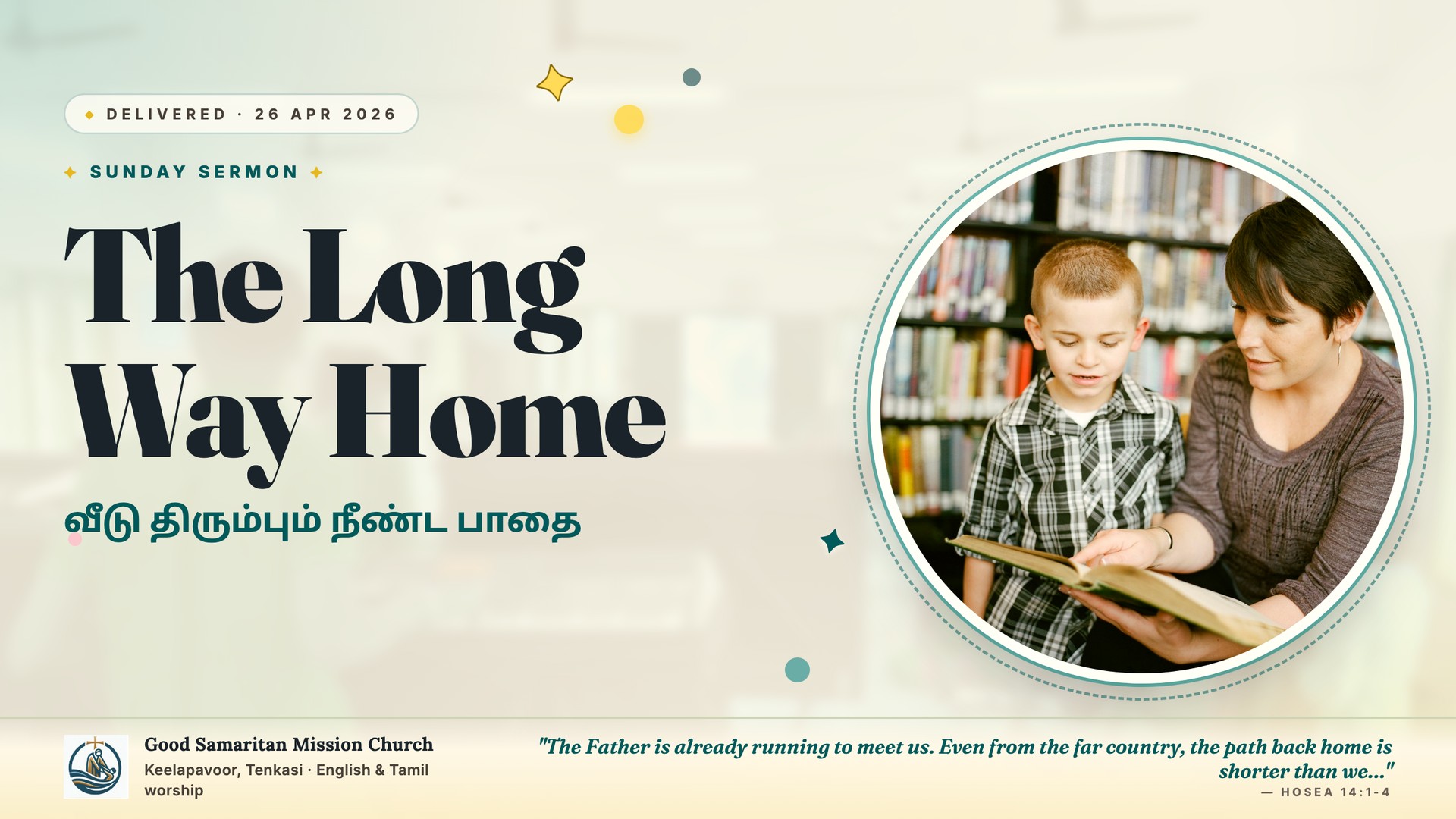
The Long Way Home
வீடு திரும்பும் நீண்ட பாதை
The Father is already running to meet us. Even from the far country, the path back home is shorter than we think.
தந்தை ஏற்கனவே நம்மை நோக்கி ஓடிவருகிறார். தூரதேசத்திலிருந்து கூட, வீடு திரும்பும் பாதை நாம் நினைப்பதை விட குறுகியதே.
Hosea 14:1-4 +5 more
The Father's Heart for His Children (தந்தையின் இருதயம் தன் பிள்ளைகளுக்காக)
The Desire for Independence (சுதந்திரத்திற்கான ஆசை)
In Jesus' parable of the prodigal son, we see a young man who had everything - a loving father, a secure home, and a guaranteed inheritance. Yet he felt constrained by the rhythms of his father's house. The daily routines, the family expectations, and the structured life felt burdensome rather than blessed.
"For My people have committed two evils: They have forsaken Me, the fountain of living waters, and hewn themselves cisterns - broken cisterns that can hold no water." - Jeremiah 2:13 (NKJV)
"என் ஜனங்கள் இரண்டு தீமைகளைச் செய்தார்கள்; ஜீவத் தண்ணீருள்ள ஊற்றாகிய என்னை விட்டுவிட்டு, தண்ணீர் நில்லாத தொட்டிகளாகிய வெடிப்புள்ள தொட்டிகளைத் தங்களுக்காக வெட்டிக்கொண்டார்கள்." - எரேமியா 2:13 (TAOVBSI)
How often do we, like this son, mistake the Father's loving boundaries for burdensome restrictions? The set-apart life that God calls us to live is not a chain but an embrace. It is not imprisonment but protection. Yet when we focus on what we think we're missing rather than what we've been given, even paradise can feel like a prison.
The Illusion of Freedom (சுதந்திரத்தின் மாயை)
The younger son demanded his inheritance and departed for a distant country. Initially, this felt like liberation. No more morning prayers, no more family responsibilities, no more structured living. He had money, friends, and what seemed like unlimited possibilities.
But sin's promise of freedom is always a lie. What begins as relief from perceived constraints quickly becomes bondage to actual chains. The son who thought he was escaping burden found himself carrying a much heavier load - the weight of consequences, loneliness, and despair.
"Therefore let him who thinks he stands take heed lest he fall." - 1 Corinthians 10:12 (NKJV)
"ஆகையால் நிற்கிறேன் என்று நினைக்கிறவன் விழாதபடிக்குக் கவனமாயிருக்கக்கடவன்." - 1 கொரிந்தியர் 10:12 (TAOVBSI)
The famine that came to that distant land represents the inevitable emptiness that follows when we try to satisfy our souls apart from God. No amount of worldly pleasure can fill the God-shaped void within us.
The Journey to Rock Bottom (அடிமட்டத்திற்கான பயணம்)
When Friends Disappear (நண்பர்கள் மறைந்துபோகும் போது)
As long as the prodigal son had money, he had companions. They celebrated with him, encouraged his reckless lifestyle, and made him feel important. But when his resources dried up, so did their loyalty. This is the harsh reality of relationships built on what we can provide rather than who we are.
The young man found himself alone, hungry, and desperate enough to take a job feeding pigs - the ultimate degradation for a Jewish man. Even then, no one offered him food. The very people who had enjoyed his hospitality now acted as if he didn't exist.
The Mercy of the Pig Pen (பன்றிக்கூடத்தின் இரக்கம்)
What seemed like the ultimate humiliation was actually God's mercy in disguise. Sometimes the Father allows us to reach the end of ourselves so we can rediscover the beginning of Him. The pig pen wasn't punishment - it was preparation for homecoming.
"But when he came to himself, he said, 'How many of my father's hired servants have bread enough and to spare, and I perish with hunger!'" - Luke 15:17 (NKJV)
"அவனுக்குப் புத்தி தெளிந்தபோது: என் தகப்பனுடைய கூலியாட்கள் எத்தனையோ பேருக்குப் போதுமான அப்பமும் மிச்சமும் இருக்கிறது, நானோ பசியினால் சாகிறேன்." - லூக்கா 15:17 (TAOVBSI)
The moment of "coming to himself" marks the beginning of repentance. It's when we stop blaming circumstances and start seeing clearly. Even the servants in his father's house lived better than he was living as a "free" man.
The Father's Response (தந்தையின் மறுமொழி)
Love That Runs (ஓடுகிற அன்பு)
The most stunning part of this parable is the father's response. While the son was still far away, planning his speech of repentance, the father saw him and ran. In that culture, dignified men did not run. But love knows no dignity when it comes to restoration.
The son had prepared to ask for a servant's position, but the father restored him to full sonship. No probationary period, no earning back trust - just immediate, complete restoration. This is the heart of the Gospel: grace that doesn't negotiate but restores fully.
"If we confess our sins, He is faithful and just to forgive us our sins and to cleanse us from all unrighteousness." - 1 John 1:9 (NKJV)
"நம்முடைய பாவங்களை நாம் அறிக்கையிட்டால், அவர் உண்மையும் நீதியும் உள்ளவராய் நம்முடைய பாவங்களை மன்னித்து, எல்லா அநீதியிலிருந்தும் நம்மைச் சுத்திகரிப்பார்." - 1 யோவான் 1:9 (TAOVBSI)
The Celebration of Return (திரும்பி வருதலின் கொண்டாட்டம்)
The father's immediate response was to call for a celebration. The best robe, the family ring, sandals for his feet, and a feast with the fatted calf - everything spoke of full restoration and great joy. The son who was dead had come alive; the one who was lost had been found.
"Israel, return to the Lord your God, for you have stumbled because of your iniquity." - Hosea 14:1 (NKJV)
"இஸ்ரவேலே, உன் தேவனாகிய கர்த்தரிடத்தில் திரும்பு; நீ உன் அக்கிரமத்தினால் விழுந்தாய்." - ஓசியா 14:1 (TAOVBSI)
This is how Heaven responds when any sinner returns home. Not with reluctance or suspicion, but with overwhelming joy and immediate acceptance.
Staying Close to Home (வீட்டிற்கு அருகில் இருத்தல்)
The Daily Means of Grace (அன்றாட கிருபையின் வழிகள்)
The tragedy is that we often drift slowly rather than leave dramatically. We maintain the appearance of faith while our hearts grow cold. We attend services while our minds wander. We participate in worship while our affections are elsewhere.
The gap between Sundays is where most spiritual drifting occurs. Daily engagement with God's Word, consistent prayer, and regular fellowship are not optional extras - they are lifelines that keep us connected to the Father's heart.
Keeping Our Eyes Fixed (நம் பார்வையை நிலைப்படுத்துதல்)
"Now to Him who is able to keep you from stumbling, and to present you faultless before the presence of His glory with exceeding joy." - Jude 24 (NKJV)
"இடறாதபடிக்கு உங்களைக் காத்து, தம்முடைய மகிமையின் சமுகத்திலே நிர்மலராக மிகுந்த சந்தோஷத்தோடே நிறுத்த வல்லவராயிருக்கிற தேவனுக்கு" - யூதா 24 (TAOVBSI)
What we look at determines where we run. The instruction is not to fight harder but to look at Jesus more consistently. When our gaze is fixed on Him, our feet naturally follow in His direction.
Application and Reflection (பயன்பாடும் சிந்தனையும்)
For Those Who Feel Far Away (தூரத்தில் இருப்பதாக உணர்பவர்களுக்கு)
If you have drifted from the Father's house, remember that He has already started running toward you. You don't have to clean up your life before coming home - you just need to start walking in His direction. The Father will cover the remaining distance.
For Those Who Are at Home (வீட்டில் இருப்பவர்களுக்கு)
Don't take the Father's love for granted. The daily rhythms of faith - prayer, worship, fellowship, service - are not burdens but blessings. They are the means by which we stay close to the heart of God and avoid the wandering that leads to the far country.
For the Whole Church (முழு சபைக்கும்)
We are called to be a community that reflects the Father's heart - quick to welcome the returning prodigal, patient with those who struggle, and committed to helping one another stay close to home. The Sunday service should feel like family reunion, not religious obligation.
Let us worship not because we have to, but because we get to. Let us draw near not from duty, but from love. And let us remember that the same God who chose us is faithful to keep us, no matter how far we may wander or how long the journey home may seem.
The path back to the Father is always shorter than we think, because love runs to meet us along the way.
Keep reading
Scroll through the full sermon to mark it as read.
Reflect on This Sermon
- 1.What is one thing from this sermon that spoke to you personally?
- 2.How can you apply this message in your daily life this week?
- 3.Is there a verse from this sermon you want to memorize?