
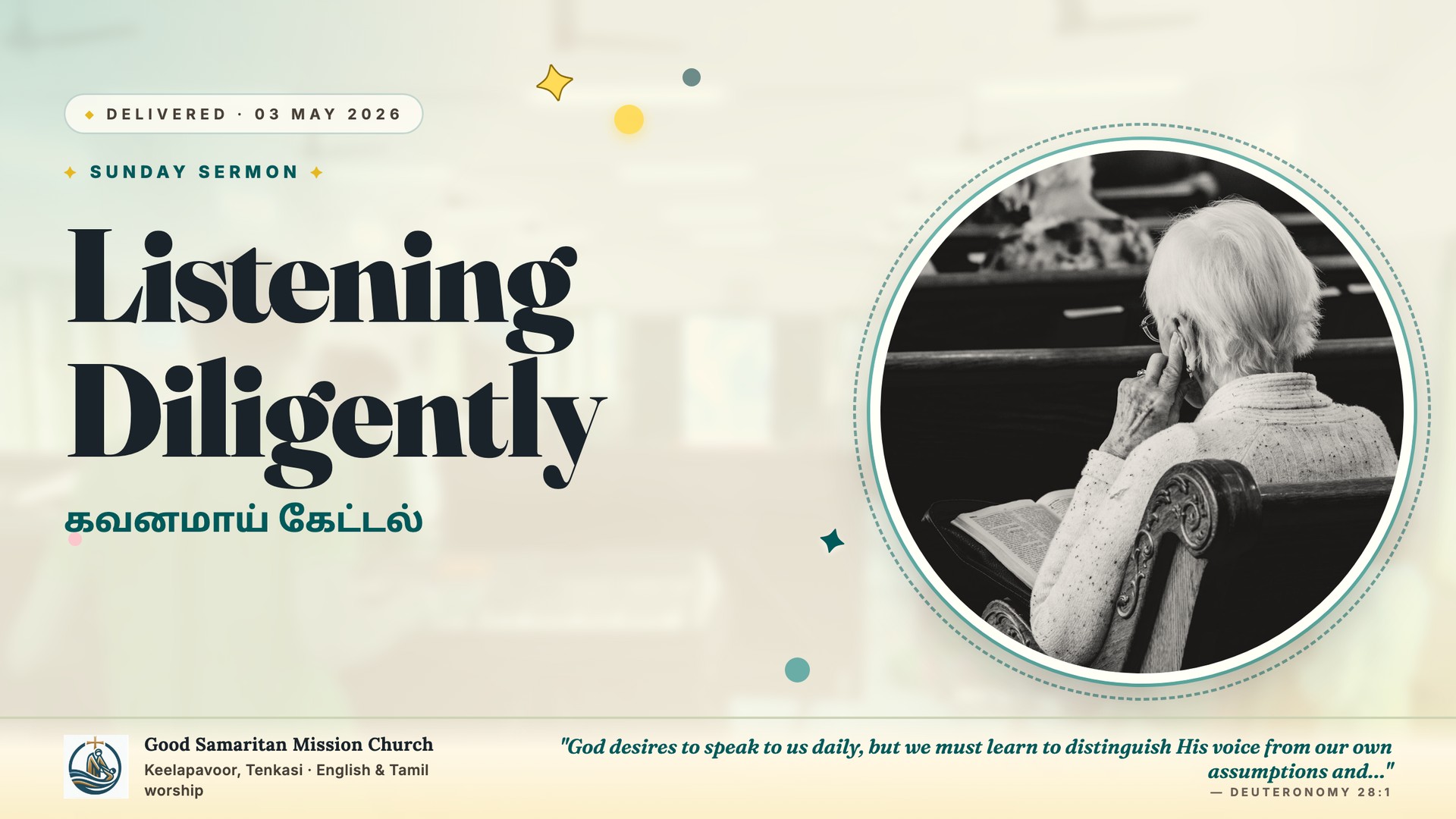
Listening Diligently
கவனமாய் கேட்டல்
God desires to speak to us daily, but we must learn to distinguish His voice from our own assumptions and listen with every fiber of our being.
தேவன் நம்முடன் தினமும் பேச விரும்புகிறார், ஆனால் அவருடைய குரலை நம் சொந்த அனுமானங்களிலிருந்து வேறுபடுத்தி, நம் உள்ளத்தின் ஆழத்திலிருந்து கேட்கக் கற்றுக்கொள்ள வேண்டும்.
Deuteronomy 28:1 +7 more
The Dangerous Condition of Presumption (ஊக நிலையின் ஆபத்து)
In Deuteronomy chapter 2, we encounter a critical lesson about spiritual life - the dangerous condition of presumption (ஊக நிலை). This refers to our tendency to assume, calculate, and presume what God's will might be rather than seeking His specific guidance for each situation.
Israel had been blessed with three significant advantages: forty years of divine provision (முன் ஏற்பாடு), general promises from God about their inheritance, and tremendous momentum (உந்தம்) - the potential energy to accomplish great things. Yet despite all these blessings, God's specific word for that moment was crucial: "Do not touch Seir."
The difference between victory and defeat, between blessing and the graveyard, hung on one simple factor - listening to God's specific word for that day.
The Hebrew Heart of Listening (கேட்பதின் எபிரேய இருதயம்)
"Now it shall come to pass, if you diligently obey the voice of the Lord your God, to observe carefully all His commandments which I command you today, that the Lord your God will set you high above all nations of the earth." - Deuteronomy 28:1 (NKJV)
"உன் தேவனாகிய கர்த்தருடைய சத்தத்திற்கு நீ உண்மையாய்ச் செவிகொடுத்து, இன்று நான் உனக்கு விதிக்கிற அவருடைய எல்லாக் கற்பனைகளின்படியும் செய்ய நீ கவனமாயிருப்பாயானால், உன் தேவனாகிய கர்த்தர் பூமியிலுள்ள சகல ஜாதிகளிலும் உன்னை மேன்மையாக வைப்பார்." - உபாகமம் 28:1 (TAOVBSI)
The Hebrew phrase "listening you shall listen" (שמוע תשמע) reveals the intensity required. This is not casual hearing or even careful attention. The repetition of the verb emphasizes that every cell in our body must be alert to what God is saying, ready to respond and obey.
This kind of listening requires our whole being to be attentive - not just our ears, but our hearts prepared to understand what response God expects from us and how we should obey.
Two Essential Words: Logos and Rhema (இரண்டு அத்தியாவசிய வார்த்தைகள்: லோகோஸ் மற்றும் ரேமா)
We must understand two Greek concepts that are crucial for spiritual maturity:
Logos - the written, settled Word of God from Genesis to Revelation. This never changes.
Rhema - the specific word God speaks to us today for our particular situation. The Holy Spirit applies the logos to our current circumstances.
The rhema never contradicts the logos, but without the rhema, we cannot properly apply God's written Word to our specific moments. We need both our Bible open and our ears open.
"Therefore Eli said to Samuel, 'Go, lie down; and it shall be, if He calls you, that you must say, "Speak, Lord, for Your servant hears."'" - 1 Samuel 3:8-9 (NKJV)
"ஏலி சாமுவேலை நோக்கி: நீ போய்ப் படுத்துக்கொள்; அவர் உன்னைக் கூப்பிட்டால் நீ: கர்த்தாவே, சொல்லும், உமது அடியான் கேட்கிறேன் என்று சொல் என்றான்." - 1 சாமுவேல் 3:8-9 (TAOVBSI)
Young Samuel needed to learn how to recognize God's voice. Listening is not natural - it requires training and practice. Even experienced servants of God must continue to ask and listen for fresh guidance.
The Tale of Two Battles: Jericho and Ai (இரண்டு யுத்தங்களின் கதை: எரிகோவும் ஆயியும்)
Victory Through Obedient Listening (கீழ்ப்படிதலான கேட்பதின் வழியாக வெற்றி)
"And the Lord said to Joshua: 'See! I have given Jericho into your hand, its king, and the mighty men of valor. You shall march around the city, all you men of war; you shall go all around the city once.'" - Joshua 6:2-3 (NKJV)
"கர்த்தர் யோசுவாவை நோக்கி: இதோ, எரிகோவையும் அதின் ராஜாவையும் பராக்கிரமசாலிகளையும் உன் கையில் ஒப்புக்கொடுத்தேன். நீங்கள் யுத்தவீரர் அனைவரும் பட்டணத்தைச் சுற்றி, பட்டணத்தை ஒருமுறை சுற்றிவாருங்கள்." - யோசுவா 6:2-3 (TAOVBSI)
At Jericho, Joshua listened to God's specific strategy. Though unconventional, he obeyed completely, and the walls fell. This was a clean victory built on careful listening.
Disaster Through Presumption (ஊகத்தின் வழியாக பேரழிவு)
"So about three thousand men went up there from the people, but they fled before the men of Ai. And the men of Ai struck down about thirty-six men, for they chased them from before the gate as far as Shebarim, and struck them down on the descent; therefore the hearts of the people melted and became like water." - Joshua 7:4-5 (NKJV)
"அப்பொழுது ஜனங்களிலே ஏறக்குறைய மூவாயிரம்பேர் அங்கே போனார்கள்; ஆனாலும் அவர்கள் ஆயீ மனுஷரின் முகத்திற்கு முன்பாக ஓடிப்போனார்கள். ஆயீ மனுஷர் அவர்களில் ஏறக்குறைய முப்பத்தாறுபேரை வெட்டினார்கள்; அவர்களைக் கோபுரவாசல் துவக்கி சேபாரீம்வரைக்கும் துரத்தி, மலையிறக்கத்திலே அவர்களை வெட்டிப்போட்டார்கள்; இதினால் ஜனங்களின் இருதயம் உருகி, தண்ணீரைப்போல் ஆயிற்று." - யோசுவா 7:4-5 (TAOVBSI)
At Ai, the very next chapter, Joshua faced a smaller, easier target. But this time he did not ask God for guidance. Relying on his own assessment and previous success, he sent three thousand men who were routed. Thirty-six Israelites died.
The same servant who heard God clearly at Jericho made assumptions at Ai, and people paid the price. Past obedience does not protect against future presumption.
The Hidden Danger: Unconfessed Sin (மறைந்திருக்கும் ஆபத்து: அறிக்கை செய்யாத பாவம்)
Why did Joshua not ask God before attacking Ai? Because there was hidden sin in the camp. Achan had taken what God had forbidden during the conquest of Jericho.
Unconfessed sin produces assumption-blindness (குருட்டுத்தனம்). When sin sits hidden in our lives, we grow strangely confident at the very moment we should be on our faces seeking God. We stop asking and start assuming - and others suffer the consequences.
This serves as a warning to examine our own hearts. The person most likely to march on "Ai" without asking is often the one who marched around "Jericho" in obedience previously. Past success can blind us faster than past failure paralyzes us.
David's Pattern: Asking Afresh (தாவீதின் முறை: மீண்டும் கேட்பது)
"Therefore David inquired of the Lord, saying, 'Shall I go up against the Philistines? Will You deliver them into my hand?' And the Lord said to David, 'Go up, for I will doubtless deliver the Philistines into your hand.'... Then David inquired of the Lord once again. And He said, 'You shall not go up; circle around behind them, and come upon them in front of the mulberry trees.'" - 2 Samuel 5:19,23 (NKJV)
"அப்பொழுது தாவீது கர்த்தரை நோக்கி: நான் பெலிஸ்தர்களுக்கு எதிராகப் போகலாமா? அவர்களை என் கையில் ஒப்புக்கொடுப்பீரா என்று விசாரித்தான். அப்பொழுது கர்த்தர் தாவீதை நோக்கி: போ, பெலிஸ்தர்களை உன் கையில் ஒப்புக்கொடுப்பேன் என்றார்... தாவீது மறுபடியும் கர்த்தரை விசாரித்தான்; அவர்: நீ நேராகப் போகாதே; அவர்களைச் சூழ்ந்துகொண்டு, கூம்மின் மரங்களுக்கு எதிராக அவர்கள்மேல் வா என்றார்." - 2 சாமுவேல் 5:19,23 (TAOVBSI)
David demonstrates the correct pattern. When the same enemy returned, he did not assume God's strategy would be the same. He asked again and received different instructions. David did not presume; he asked afresh.
This teaches us to ask anew even for things we have done many times before, even after years of ministry experience. Fresh situations require fresh words from God.
God's Covenants We Must Remember (நாம் நினைவில் கொள்ள வேண்டிய தேவனின் உடன்படிக்கைகள்)
"The secret of the Lord is with those who fear Him, and He will show them His covenant." - Psalm 25:14 (NKJV)
"கர்த்தருடைய இரகசியம் அவருக்குப் பயந்தவர்களிடத்தில் இருக்கிறது; தமது உடன்படிக்கையை அவர்களுக்குத் தெரியப்படுத்துவார்." - சங்கீதம் 25:14 (TAOVBSI)
God reveals His covenants to those who fear Him. In Deuteronomy 2, God reminds Israel that He has made covenants with others too. Edom (descendants of Esau), Moab and Ammon (descendants of Lot) had received their own inheritance from God, and Israel was not to touch their territories.
This reveals a profound truth: God remembers covenants we have forgotten. The mercy God showed to Lot in Genesis 19 was still bearing fruit 400 years later in the form of protected land for his descendants.
Recognizing Others' Boundaries (மற்றவர்களின் எல்லைகளை அறிதல்)
Not everything belongs to us. God has established boundaries and given different gifts to different people. We cannot claim everything for ourselves or be jealous of what God has given to others.
"And if some of the branches were broken off, and you, being a wild olive tree, were grafted in among them, and with them became a partaker of the root and fatness of the olive tree, do not boast against the branches. But if you do boast, remember that you do not support the root, but the root supports you." - Romans 11:17-18 (NKJV)
"கிளைகளில் சிலவைகள் முறிக்கப்பட்டு, காட்டு ஒலிவமரமாகிய நீ அவைகளுக்குள் ஒட்டுப்போடப்பட்டு, ஒலிவமரத்தின் வேரிலும் கொழுப்பிலும் அவைகளோடேகூடப் பங்காளியானதுண்டானால், அந்தக் கிளைகளுக்கு விரோதமாய் மேட்டிமையடித்துக்கொள்ளாதே; மேட்டிமையடித்துக்கொண்டாலும் நீ வேரைத் தாங்குகிறவன் அல்ல, வேர் உன்னைத் தாங்குகிறது." - ரோமர் 11:17-18 (TAOVBSI)
Practical Applications for Daily Life (தினசரி வாழ்க்கைக்கான நடைமுறை பயன்பாடுகள்)
1. Daily Dependence on God's Voice (தேவனுடைய குரலில் தினசரி சார்பு)
Every day, in every situation, we must seek God's specific guidance. Whether it's a simple meal, watching a movie, or making major decisions, we should acknowledge our dependence on Him and seek His blessing and direction.
We pray before meals not because food is dangerous, but because we recognize that countless people lack even basic nutrition. We acknowledge God's provision with genuine gratitude.
2. Examining Our Hearts for Hidden Sin (மறைந்திருக்கும் பாவத்திற்காக நம் இருதயங்களை ஆய்வு செய்தல்)
Unconfessed sin creates spiritual blindness that leads to presumptuous decisions. We must regularly examine our hearts and confess any sin to God, claiming the victory Jesus won on the cross over all sin and curse.
3. Asking Fresh for Familiar Situations (பரிச்சயமான சூழ்நிலைகளுக்கு புதிதாக கேட்டல்)
Even for tasks we have performed countless times, we should seek God's guidance. His strategy may be different today than it was yesterday. Experienced servants are often more vulnerable to presumption than beginners.
4. Respecting Others' God-Given Boundaries (மற்றவர்களுக்கு தேவன் வழங்கிய எல்லைகளை மரியாதை செய்தல்)
We must not be jealous of what God has given others or try to claim what belongs to them. God has specific boundaries and blessings for each person. Our task is to be faithful within our own calling and boundaries.
5. Thinking Generationally (தலைமுறைகளை நினைத்துக் கொண்டு சிந்தித்தல்)
Our choices today will impact our children and grandchildren. The sins of previous generations may affect us, but our faithfulness today can break negative patterns and establish blessings for future generations.
Conclusion: The Heart of Discipleship (முடிவு: சீடத்துவத்தின் இருதயம்)
True spiritual maturity is not about accumulating knowledge or experience - it is about maintaining a posture of dependence and listening toward God. The moment we think we can proceed based on past successes or general principles alone, we step into the dangerous territory of presumption.
God desires to speak with us daily, even moment by moment. But His voice comes to those who know His written Word and have learned to distinguish His voice from their own thoughts and the voices of others.
May we be like Samuel, learning to say, "Speak, Lord, for Your servant hears." May we be like David, asking fresh guidance even when facing familiar challenges. And may we be like Israel at their best - a people who listen diligently to the voice of the Lord their God.
Reflection Questions:
- In what areas of your life might you be operating on presumption rather than seeking God's specific guidance?
- Are there any unconfessed sins that might be creating spiritual blindness in your decisions?
- How can you develop a more consistent practice of "asking fresh" before making decisions?
- What boundaries has God established in your life that you need to respect rather than trying to expand beyond His will?
Keep reading
Scroll through the full sermon to mark it as read.
Reflect on This Sermon
- 1.What is one thing from this sermon that spoke to you personally?
- 2.How can you apply this message in your daily life this week?
- 3.Is there a verse from this sermon you want to memorize?