
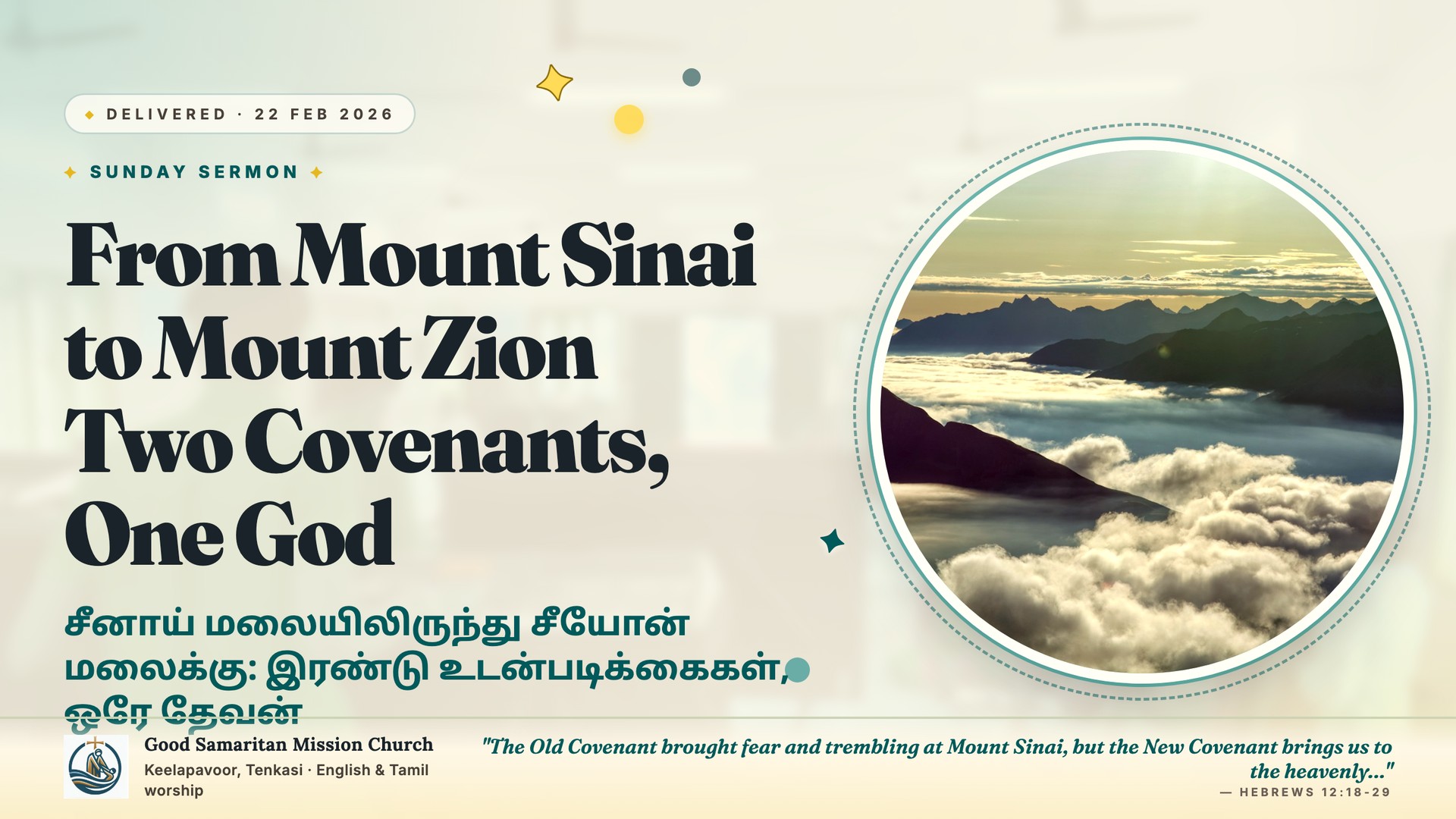
From Mount Sinai to Mount Zion: Two Covenants, One God
சீனாய் மலையிலிருந்து சீயோன் மலைக்கு: இரண்டு உடன்படிக்கைகள், ஒரே தேவன்
The Old Covenant brought fear and trembling at Mount Sinai, but the New Covenant brings us to the heavenly Jerusalem with joy and celebration through Jesus Christ.
பழைய உடன்படிக்கை சீனாய் மலையில் பயத்தையும் நடுக்கத்தையும் கொண்டுவந்தது, ஆனால் புதிய உடன்படிக்கை இயேசு கிறிஸ்து மூலம் மகிழ்ச்சியுடன் பரலோக எருசலேமுக்கு நம்மை அழைத்துச் செல்கிறது.
Hebrews 12:18-29
Introduction (அறிமுகம்)
The writer of Hebrews presents us with one of the most striking contrasts in all of Scripture - the difference between God's revelation in the Old Covenant at Mount Sinai and His revelation in the New Covenant at Mount Zion. This passage reveals not two different Gods, but one God working through two distinct covenants to accomplish His eternal purposes.
The Terror of Mount Sinai (சீனாய் மலையின் பயங்கரம்)
The Physical Manifestations (உடல்ரீதியான வெளிப்பாடுகள்)
The Old Covenant was established with overwhelming displays of God's power and holiness. The Israelites encountered God at Mount Sinai through terrifying physical manifestations:
"For you have not come to the mountain that may be touched and that burned with fire, and to blackness and darkness and tempest, and the sound of a trumpet and the voice of words, so that those who heard it begged that the word should not be spoken to them anymore." - Hebrews 12:18-19 (NKJV)
"அந்தியம் தொடக்கூடியதும், அக்கினிபட்டு எரிகிறதுமான மலையினிடத்திற்கும், மந்தாரம், இருள், பெருங்காற்று ஆகிய இவைகளிடத்திற்கும், எக்காள முழக்கத்திடத்திற்கும், வார்த்தைகளுடைய சத்தத்திடத்திற்கும் நீங்கள் வந்து சேரவில்லை." - எபிரேயர் 12:18-19 (TAOVBSI)
The mountain burned with fire, surrounded by darkness, storm, and the sound of a trumpet. These physical elements created an atmosphere of divine judgment and unapproachable holiness. The very ground was untouchable - even animals that touched the mountain faced death.
The People's Response (மக்களின் பதில்)
The Israelites' reaction reveals the nature of law-based relationship with God. They were so terrified by God's presence that they begged Moses not to let God speak directly to them anymore. This fear was not merely emotional but spiritually appropriate - sinful humanity cannot stand before the holy God under the demands of perfect law.
"(For they could not endure what was commanded: 'And if so much as a beast touches the mountain, it shall be stoned or shot with an arrow.' And so terrifying was the sight that Moses said, 'I am exceedingly afraid and trembling.')" - Hebrews 12:20-21 (NKJV)
"ஏனெனில், ஒரு மிருகமாகிலும் மலையைத் தொட்டால், அது கல்லெறி உண்டு அல்லது அம்பினால் எய்யப்பட்டு சாக வேண்டும் என்று சொல்லப்பட்ட கட்டளையைச் சகிக்க மாட்டாதிருந்தார்கள்." - எபிரேயர் 12:20-21 (TAOVBSI)
Even Moses, the mediator of the Old Covenant, trembled with fear. This demonstrates that the law, while holy and good, creates distance between God and humanity because it demands perfection that we cannot achieve.
The Joy of Mount Zion (சீயோன் மலையின் மகிழ்ச்சி)
The Heavenly Jerusalem (பரலோக எருசலேம்)
In stark contrast to the terror of Sinai, believers in the New Covenant have come to Mount Zion - not a physical mountain, but the spiritual reality of God's eternal kingdom:
"But you have come to Mount Zion and to the city of the living God, the heavenly Jerusalem, to an innumerable company of angels, to the general assembly and church of the firstborn who are registered in heaven, to God the Judge of all, to the spirits of just men made perfect, to Jesus the Mediator of the new covenant, and to the blood of sprinkling that speaks better things than that of Abel." - Hebrews 12:22-24 (NKJV)
"நீங்களோ சீயோன் மலையினிடத்திற்கும், ஜீவனுள்ள தேவனுடைய நகரமாகிய பரம எருசலேமினிடத்திற்கும், ஆயிரம் பதினாயிரமான தேவதூதர்களிடத்திற்கும், பரலோகத்தில் பேர் எழுதியிருக்கிற முதற்பேறானவர்களின் சர்வ சங்கமாகிய சபையினிடத்திற்கும், யாவருக்கும் நியாயாதிபதியாகிய தேவனிடத்திற்கும், பூரணமாக்கப்பட்ட நீதிமான்களுடைய ஆவிகளிடத்திற்கும், புதிய உடன்படிக்கையின் மத்தியஸ்தராகிய இயேசுவினிடத்திற்கும், ஆபேலுடைய ரத்தத்தில் பேசினதைப் பார்க்கிலும் நன்மையானவைகளைப் பேசுகிற ரத்தமாகிய தெளிக்கப்படும் ரத்தத்தினிடத்திற்கும் வந்து சேர்ந்தீர்கள்." - எபிரேயர் 12:22-24 (TAOVBSI)
The Great Assembly (மகத்தான கூட்டம்)
The New Covenant brings us into a celebration, not isolation. We join an innumerable company of angels, the assembly of the firstborn whose names are written in heaven, and the spirits of righteous men made perfect. This is not a future hope only, but a present spiritual reality for every believer.
Jesus, the Superior Mediator (இயேசு, உயர்ந்த மத்தியஸ்தர்)
The key difference between the covenants lies in the mediator. Moses mediated the Old Covenant with trembling, but Jesus mediates the New Covenant with His own blood. His blood speaks better things than Abel's blood - not for vengeance, but for mercy and forgiveness.
The Unchanging God Behind Both Covenants (இரண்டு உடன்படிக்கைகளுக்குப் பின்னால் மாறாத தேவன்)
God's Voice Then and Now (அப்போதும் இப்போதும் தேவனுடைய சத்தம்)
"See that you do not refuse Him who speaks. For if they did not escape who refused Him who spoke on earth, much more shall we not escape if we turn away from Him who speaks from heaven." - Hebrews 12:25 (NKJV)
"பேசுகிறவருக்கு நீங்கள் செவிகொடுக்க மாட்டேன் என்று விலகாதபடிக்கு எச்சரிக்கையாயிருங்கள். ஏனெனில், பூமியிலே பேசினவருக்குச் செவிகொடுக்க மாட்டேன் என்று விலகினவர்கள் தப்பிப்போகாமல் இருக்க, பரலோகத்திலிருந்து பேசுகிறவரை நாம் விட்டு விலகினால் எப்படித் தப்பிப்போவோம்?" - எபிரேயர் 12:25 (TAOVBSI)
The same God who spoke at Sinai now speaks from heaven through His Son. His voice has not weakened; if anything, the responsibility to listen has increased because the revelation is clearer and the access is greater.
The Final Shaking (இறுதி அசைவு)
"Whose voice then shook the earth; but now He has promised, saying, 'Yet once more I shake not only the earth, but also heaven.' Now this, 'Yet once more,' indicates the removal of those things that are being shaken, as of things that are made, that the things which cannot be shaken may remain." - Hebrews 12:26-27 (NKJV)
"அவருடைய சத்தம் அப்போழுது பூமியை அசையப்பண்ணிற்று. இன்னும் ஒருதரம் நான் பூமியை மாத்திரமல்ல, வானத்தையும் அசையப்பண்ணுவேன் என்று இப்போழுது வாக்குத்தத்தம் செய்திருக்கிறார். இன்னும் ஒருதரம் என்கிற சொல்லானது, அசையாதவைகள் நிலையிருக்கத்தக்கதாக அசையுள்ளவைகள் உண்டாக்கப்பட்டவைகளைப் போல மாறிப்போகும் என்பதைக் குறிக்கிறது." - எபிரேயர் 12:26-27 (TAOVBSI)
God's voice at Sinai shook the earth, but His final word will shake both earth and heaven. This shaking will remove everything temporary and created, leaving only what is eternal and unshakeable.
Our Response: Worship with Reverence (நமது பதில்: பயபக்தியுடன் ஆராதனை)
Gratitude for Grace (கிருபைக்காக நன்றி)
"Therefore, since we are receiving a kingdom which cannot be shaken, let us have grace, by which we may serve God acceptably with reverence and godly fear." - Hebrews 12:28 (NKJV)
"ஆதலால், அசையாத ராஜ்யத்தைப் பெறுகிறவர்களாகிய நாம் பயத்தோடும் பக்தியோடும் தேவனுக்குப் பிரியமாய் ஆராதனை செய்யும்படி கிருபையைப் பெற்றுக்கொள்ள கடவோம்." - எபிரேயர் 12:28 (TAOVBSI)
We have received an unshakeable kingdom not through our works but through grace. This should produce gratitude that expresses itself in acceptable worship.
The Consuming Fire (எரிக்கும் அக்கினி)
"For our God is a consuming fire." - Hebrews 12:29 (NKJV)
"நம்முடைய தேவன் பஞ்சிக்கிற அக்கினியாயிருக்கிறார்." - எபிரேயர் 12:29 (TAOVBSI)
The God of grace is still the God of holiness. He remains a consuming fire - not to destroy those who come to Him through Christ, but to purify and refine them. His holiness has not diminished; rather, His love has provided a way for us to approach Him safely.
Application and Reflection (பயன்பாடும் சிந்தனையும்)
Questions for Personal Reflection (தனிப்பட்ட சிந்தனைக்கான கேள்விகள்)
-
Am I living in the fear of Mount Sinai or the joy of Mount Zion? Our daily experience should reflect the confidence and celebration that comes from being accepted in Christ, not the anxiety of trying to earn God's approval through performance.
-
How do I balance reverence and joy in worship? True worship under the New Covenant combines heartfelt celebration with deep reverence for God's holiness.
-
What temporary things am I clinging to that need to be shaken loose? God's shaking in our lives often targets our false securities and misplaced priorities to establish what is truly unshakeable.
Living as Citizens of the Unshakeable Kingdom (அசையாத ராஜ்யத்தின் குடிமக்களாக வாழ்தல்)
As recipients of the New Covenant, we are called to live as citizens of an unshakeable kingdom while still residing in a shakeable world. This means:
- Confidence in Access: We can approach God boldly through Christ, knowing that His blood has opened the way into the Most Holy Place.
- Community in Celebration: We join with angels and the saints in ongoing worship and fellowship.
- Consistency in Character: Our lives should reflect the transformation that comes from being citizens of heaven.
The contrast between Mount Sinai and Mount Zion is not merely historical but deeply personal. Every believer has moved from the terror of the law to the joy of grace, from the isolation of fear to the community of faith, from the instability of human effort to the unshakeable foundation of Christ's finished work.
Let us therefore worship with gratitude, serve with reverence, and live with the confidence that we belong to a kingdom that cannot be shaken, established by a God whose love is as unchanging as His holiness.
Keep reading
Scroll through the full sermon to mark it as read.
Reflect on This Sermon
- 1.What is one thing from this sermon that spoke to you personally?
- 2.How can you apply this message in your daily life this week?
- 3.Is there a verse from this sermon you want to memorize?