
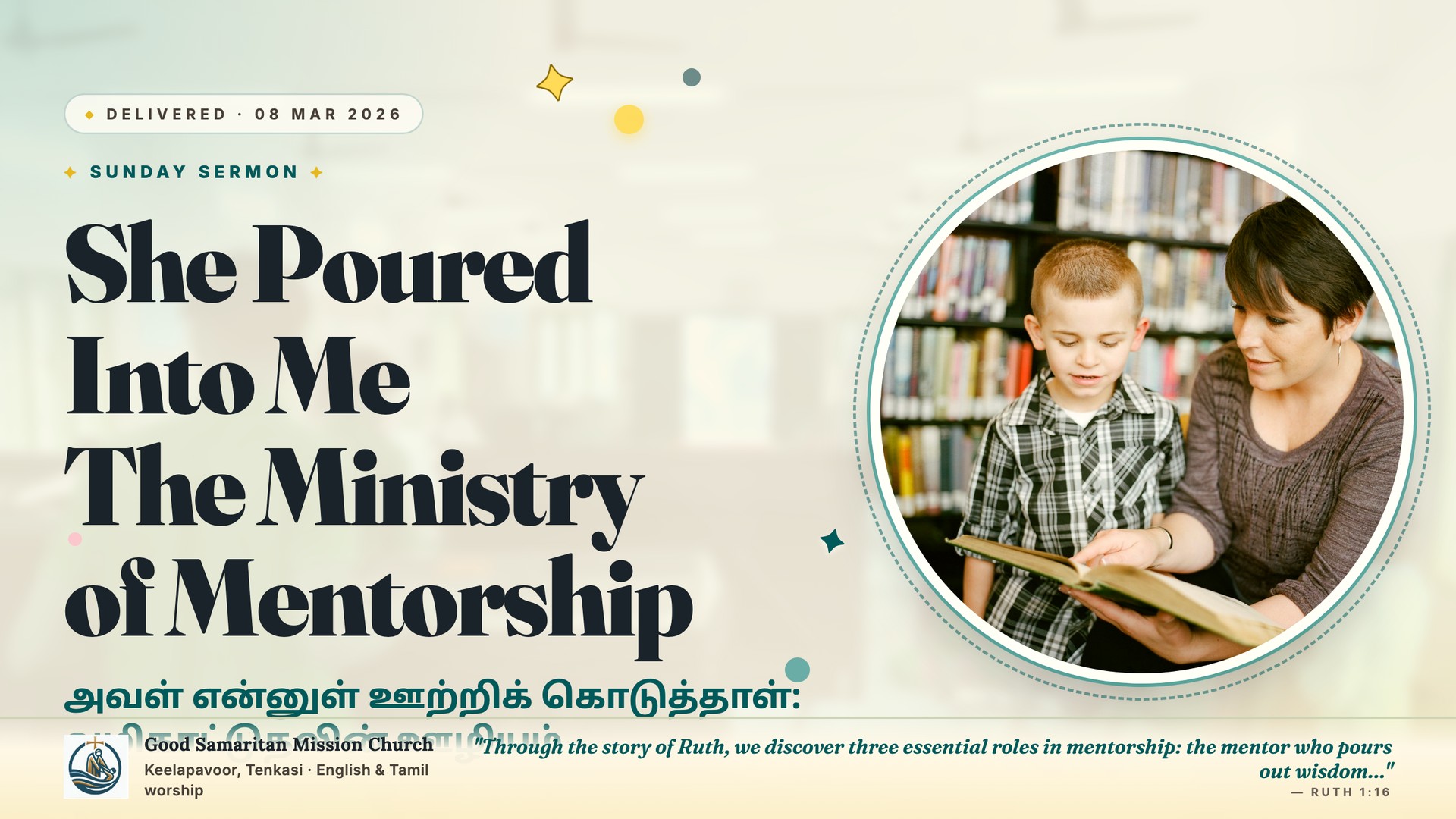
She Poured Into Me: The Ministry of Mentorship
அவள் என்னுள் ஊற்றிக் கொடுத்தாள்: வழிகாட்டுதலின் ஊழியம்
Through the story of Ruth, we discover three essential roles in mentorship: the mentor who pours out wisdom, the learner who receives with humility, and the protector who opens doors.
ரூத்தின் கதையின் மூலம், வழிகாட்டுதலில் மூன்று அத்தியாவசிய பாத்திரங்களைக் கண்டுபிடிக்கிறோம்: ஞானத்தை ஊற்றும் வழிகாட்டி, தாழ்மையுடன் ஏற்கும் கற்றுக்கொள்பவர், மற்றும் வாசல்களைத் திறக்கும் பாதுகாவலர்.
Ruth 1:16 +6 more
Introduction: A Day of Celebration (அறிமுகம்: கொண்டாட்டத்தின் நாள்)
On this International Women's Day, the entire world celebrates the contributions of women. This is a day for us to recognize and honor the transformative power of women who pour into others' lives through mentorship and guidance.
Today we examine the principle of "வழிகாட்டும் ஊழியம்" (mentoring ministry) through one of Scripture's most powerful narratives. The Book of Ruth presents us with a story of famine, death, and crossroads - yet ultimately reveals how God accomplishes His greatest work not through isolated individuals, but through faithful relationships where people invest in one another.
The Story: Three Characters, Three Lessons (கதை: மூன்று கதாபாத்திரங்கள், மூன்று பாடங்கள்)
The account begins with tragedy: famine strikes the land, death claims the men, and three women - Naomi and her two daughters-in-law - face an uncertain future. When Naomi encourages both daughters-in-law to return to their families, one departs, but Ruth makes a life-altering decision to remain. This choice sets in motion a chain of events that demonstrates three essential roles in meaningful mentorship.
Through this narrative, we observe three distinct character types that represent roles each of us is called to fulfill: the mentor (வழிகாட்டி), the mentee (வழிகாட்டப்படுபவர்), and the protector (பாதுகாவலர்). Let us examine each role through the lives of Naomi, Ruth, and Boaz.
Naomi: The Mentor Who Pours Out (நகோமி: ஊற்றிக் கொடுக்கும் வழிகாட்டி)
Wisdom Born from Experience (அனுபவத்தில் பிறந்த ஞானம்)
Naomi had lost everything - her husband, both sons, and her homeland. In her grief, she even asked to be called "Mara" (bitter) rather than Naomi (pleasant). Yet despite her personal losses, she possessed three invaluable qualities that made her an effective mentor: wisdom (ஞானம்), experience (அனுபவம்), and faith (விசுவாசம்).
"And Naomi said to her two daughters-in-law, 'Go, return each to her mother's house. The Lord deal kindly with you, as you have dealt with the dead and with me.'" - Ruth 1:8 (NKJV)
"நகோமி தன் இரண்டு மருமகளையும் நோக்கி: நீங்கள் போய், அவரவர் தாய்வீட்டுக்குத் திரும்பிப்போங்கள்; நீங்கள் மரித்தவர்களுக்கும் எனக்கும் செய்த தயவுக்குச் சரியாகக் கர்த்தர் உங்களுக்குத் தயவுசெய்வாராக" - ரூத் 1:8 (TAOVBSI)
Her wisdom was evident in the practical, strategic guidance she provided Ruth. She knew which fields were safe for gleaning, how to approach Boaz respectfully, and when the time was right for Ruth to make her request. This was not theoretical knowledge but wisdom earned through a lifetime of experience.
The Ministry of Direction with Love (அன்புடன் கூடிய வழிகாட்டுதலின் ஊழியம்)
Naomi's greatest gift to Ruth was not comfort alone, but direction paired with genuine care. She provided specific instructions about where to glean, how to conduct herself, and when to take action. Her guidance was:
- Practical - She gave Ruth actionable steps
- Protective - She ensured Ruth's safety and reputation
- Strategic - She understood timing and relationships
- Faith-based - She trusted God to work through their obedience
"Then Naomi her mother-in-law said to her, 'My daughter, shall I not seek security for you, that it may be well with you?'" - Ruth 3:1 (NKJV)
"அப்பொழுது அவள் மாமியாராகிய நகோமி அவளை நோக்கி: என் மகளே, உனக்கு நன்மையுண்டாகும்படி உனக்கு இளைப்பாறுதலை நான் தேடவேண்டாமோ?" - ரூத் 3:1 (TAOVBSI)
True mentorship does not wait until one has achieved perfection. It offers what one possesses in the current season. Naomi demonstrated that even in brokenness, one can still mentor others effectively.
Ruth: The Learner Who Rises (ரூத்: உயரும் கற்றுக்கொள்பவர்)
Loyalty Over Convenience (வசதிக்கு மேல் விசுவாசம்)
Ruth possessed every reasonable justification to return to Moab - familiar culture, family connections, potential for remarriage, and economic security. Instead, she chose loyalty to her mother-in-law over personal convenience. This decision reveals three qualities essential for effective mentorship reception:
- Teachability (கற்றுக்கொள்ளும் தயார்நிலை) - She maintained an eagerness to learn despite difficult circumstances
- Faith (விசுவாசம்) - She trusted Naomi's judgment completely
- Work ethic (உழைப்பு) - She was willing to begin at the bottom without complaint
"But Ruth said: 'Entreat me not to leave you, or to turn back from following after you; for wherever you go, I will go; and wherever you lodge, I will lodge; your people shall be my people, and your God, my God.'" - Ruth 1:16 (NKJV)
"ரூத் சொன்னது: உம்மை விட்டுப் போகவும், உம்மைப் பின்பற்றாமல் திரும்பிப்போகவும் என்னைச் சொல்லாதேயும்; நீர் எங்கே போவீரோ அங்கே நானும் போவேன்; நீர் எங்கே தங்குவீரோ அங்கே நானும் தங்குவேன்; உம்முடைய ஜனம் என் ஜனம், உம்முடைய தேவன் என் தேவன்" - ரூத் 1:16 (TAOVBSI)
Humble Action Without Argument (விவாதமின்றி தாழ்மையான செயல்)
Ruth's response to guidance was remarkable for what she did not do - she did not argue, negotiate, or delay. When Naomi suggested she glean in the fields, Ruth immediately responded, "Let me go to the fields and pick up the leftover grain." When given instructions about approaching Boaz, her response was simply, "I will do whatever you say."
This pattern reveals a crucial principle: effective mentees honor the relationship by taking wisdom seriously and implementing it faithfully. Ruth understood that gleaning grain, though humble work, was an opportunity to demonstrate character and work ethic.
Relationship Above Self-Interest (சுயநலத்திற்கு மேல் உறவு)
Ruth consistently prioritized her relationship with Naomi above her own immediate interests. She shared her daily provisions, sought her mother-in-law's counsel before making decisions, and ensured Naomi's welfare throughout their journey. This demonstrates that healthy mentorship relationships involve mutual care and honor.
Boaz: The Protector Who Opens Doors (போவாஸ்: வாசல்களைத் திறக்கும் பாதுகாவலர்)
Power Deployed for Others' Good (பிறருக்கான நன்மைக்காக பயன்படுத்தப்பட்ட அதிகாரம்)
Boaz possessed significant advantages - wealth (செல்வம்), social standing (சமூக அந்தஸ்து), and authority (அதிகாரம்). Rather than ignoring Ruth's circumstances or offering minimal assistance, he deliberately chose to deploy all his resources for her benefit and protection.
His response pattern reveals the marks of authentic allyship:
- Notice (கவனிப்பு) - He observed Ruth's character and situation
- Inquire (விசாரணை) - He asked about her background and needs
- Act (செயல்பாடு) - He took concrete steps without waiting for applause
"Then Boaz said to Ruth, 'You will listen, my daughter, will you not? Do not go to glean in another field, nor go from here, but stay close by my young women.'" - Ruth 2:8 (NKJV)
"அப்பொழுது போவாஸ் ரூத்தை நோக்கி: என் மகளே, கேள்; வேறே வயலிலே கதிர் பொறுக்கப்போகாமல், இந்த இடத்தைவிட்டு நீங்காமல், என் பணிப்பெண்களோடே இருந்துகொள்" - ரூத் 2:8 (TAOVBSI)
The Cost of True Protection (உண்மையான பாதுகாப்பின் விலை)
When the opportunity arose for legal redemption, the closer relative walked away because it involved financial cost. Boaz, however, willingly accepted the expense and responsibility. This demonstrates a crucial principle: genuine allyship is not convenient or cost-free. It requires sacrificing comfort, credit, or personal advantage for another's welfare.
Boaz provided Ruth with:
- Access - Permission to glean in his fields
- Protection - Instructions to his workers to respect her
- Provision - Deliberately left grain for her to find
- Dignity - Invited her to eat at his table
- Security - Legal redemption and marriage
"Moreover, Ruth the Moabitess, the widow of Mahlon, I have acquired as my wife, to perpetuate the name of the dead through his inheritance, that the name of the dead may not be cut off from among his brethren and from his position at the gate. You are witnesses this day." - Ruth 4:10 (NKJV)
"மேலும் மக்லோனின் மனைவியாகிய மோவாபிய ஸ்த்ரீ ரூத்தையும் மரித்தவனுடைய நாமம் அவனுடைய சுதந்தரத்திலே நிலைநிற்கும்படிக்கும், மரித்தவனுடைய நாமம் அவனுடைய சகோதரர்களுக்குள்ளும் அவனுடைய ஊரின் வாசலிலும் அறுப்புண்டுபோகாதபடிக்கும், அவளை எனக்கு மனைவியாகக் கொண்டேன்; இன்று நீங்கள் சாட்சிகள்" - ரூத் 4:10 (TAOVBSI)
The Legacy: Generational Blessing (மரபு: தலைமுறை ஆசீர்வாதம்)
From Tragedy to Triumph (துக்கத்திலிருந்து வெற்றிக்கு)
The story's conclusion reveals God's remarkable ability to transform loss into legacy. Naomi poured out her wisdom, Ruth rose through humble faithfulness, and Boaz stepped forward with protective provision. The result was not merely individual blessing but generational impact.
"So Boaz took Ruth and she became his wife; and when he went in to her, the Lord gave her conception, and she bore a son... And they called his name Obed. He is the father of Jesse, the father of David." - Ruth 4:13, 17 (NKJV)
"இவ்விதமாய்ப் போவாஸ் ரூத்தைத் திருமணம்பண்ணிக்கொண்டான்; அவள் அவனுக்கு மனைவியானாள்; அவன் அவளிடத்தில் சேர்ந்தபோது கர்த்தர் அவளுக்குக் கர்ப்பத்தைக் கொடுத்தார்; அவள் ஒரு குமாரனைப் பெற்றாள்... அவனுக்கு ஓபேத் என்று பேரிட்டார்கள்; இவன் தாவீதின் தகப்பனாகிய ஈசாயின் தகப்பன்" - ரூத் 4:13, 17 (TAOVBSI)
Obed became the grandfather of King David and an ancestor of Jesus Christ. When women are mentored, protected, and empowered, the blessing extends far beyond the immediate recipients - it flows to generations yet unborn.
Application: Our Call Today (பயன்பாடு: இன்று நமது அழைப்பு)
For Potential Mentors (சாத்தியமான வழிகாட்டிகளுக்கு)
The call to mentor others does not require perfection, only willingness to share what God has taught through your experiences. Consider:
- What wisdom has your journey produced that could benefit someone else?
- What access or influence do you possess that could open doors for others?
- Who in your sphere might benefit from intentional guidance?
For Those Seeking Guidance (வழிகாட்டுதல் தேடுபவர்களுக்கு)
Like Ruth, the posture of a good mentee involves humility, teachability, and faithful implementation:
- Are you genuinely open to correction and guidance from those who have gone before you?
- Do you honor relationships by taking wise counsel seriously?
- Are you willing to start humbly and work diligently, even in small things?
For Those with Influence (செல்வாக்குள்ளவர்களுக்கு)
Boaz demonstrates that true allyship requires intentional use of one's advantages for others' benefit:
- Where do you have power, access, or influence that could protect and elevate others?
- Are you willing to advocate for someone's safety, opportunity, or dignity even when it costs you something?
- Will you be the person who steps forward when others walk away?
The Wisdom of Women (பெண்களின் ஞானம்)
Scripture reminds us of the distinctive calling upon women to speak wisdom and teach kindness:
"She opens her mouth with wisdom, and on her tongue is the law of kindness." - Proverbs 31:26 (NKJV)
"ஞானத்தோடே தன் வாயைத் திறக்கிறாள்; தயவுள்ள போதகம் அவள் நாவின்மேல் இருக்கிறது" - நீதிமொழிகள் 31:26 (TAOVBSI)
"Open your mouth for the speechless, in the cause of all who are appointed to die." - Proverbs 31:8 (NKJV)
"பேசமுடியாதவர்களுக்காகவும், தவிக்கிறவர்கள் எல்லாருடைய நியாயத்துக்காகவும் உன் வாயைத் திற" - நீதிமொழிகள் 31:8 (TAOVBSI)
On this International Women's Day, we celebrate not only women's achievements but also their calling to pour wisdom into the next generation. The ministry of mentorship - whether as mentor, mentee, or protector - remains one of the most powerful ways God advances His kingdom through faithful relationships.
May we each find our place in this sacred chain of investment, understanding that when we faithfully fulfill our role, the blessing extends far beyond what we can see to generations yet to come.
Keep reading
Scroll through the full sermon to mark it as read.
Reflect on This Sermon
- 1.What is one thing from this sermon that spoke to you personally?
- 2.How can you apply this message in your daily life this week?
- 3.Is there a verse from this sermon you want to memorize?