
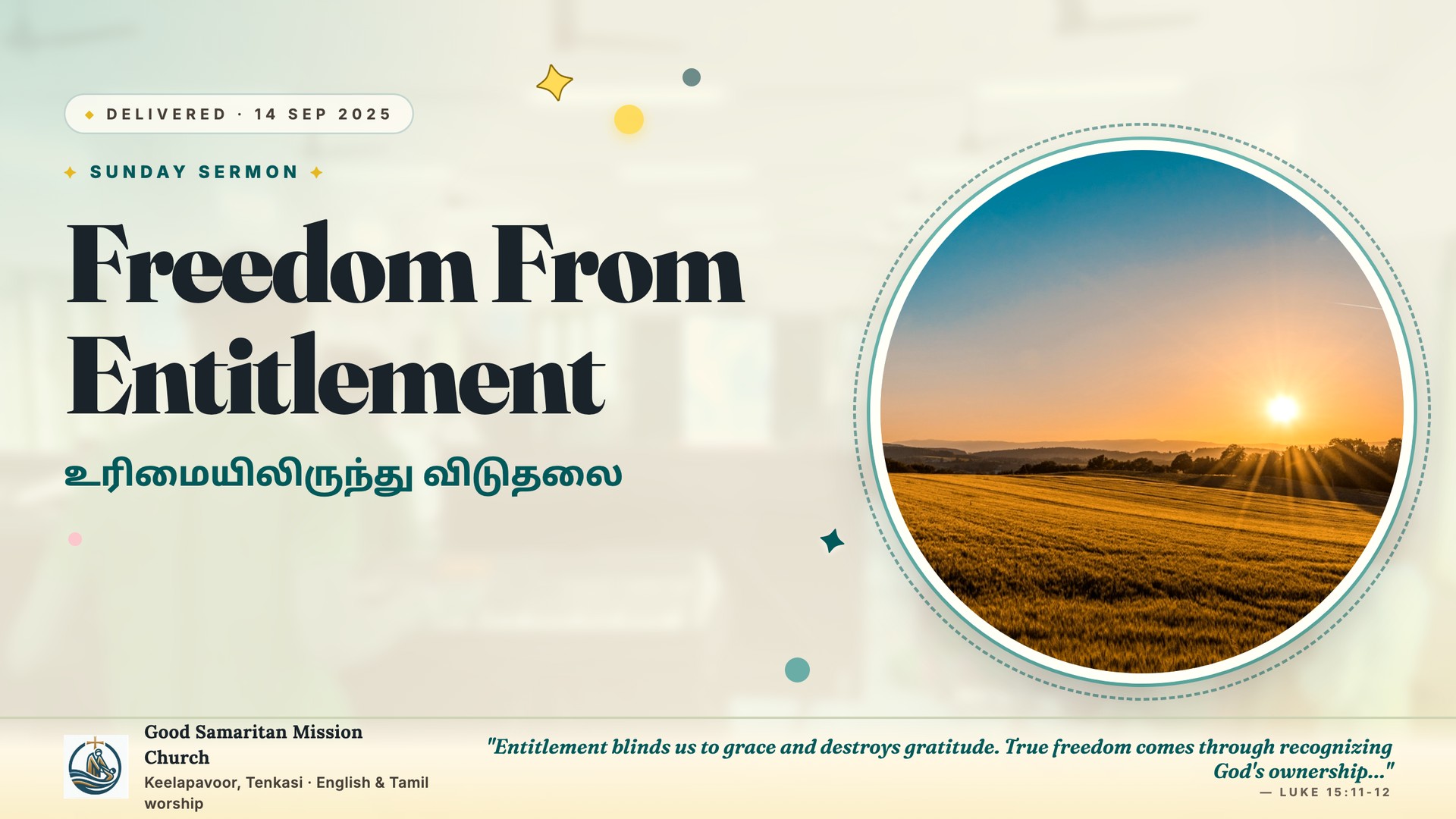
Freedom From Entitlement
உரிமையிலிருந்து விடுதலை
Entitlement blinds us to grace and destroys gratitude. True freedom comes through recognizing God's ownership and living with reverent gratitude.
உரிமை நம்மை கிருபைக்கு குருடாக்குகிறது மற்றும் நன்றியுணர்வை அழிக்கிறது. கடவுளின் உரிமையை அறிந்து பயபக்தியுடன் வாழ்வதே உண்மையான விடுதலை.
Luke 15:11-12 +11 more
Introduction (அறிமுகம்)
Entitlement is the belief that I deserve something from others, regardless of my responsibility or relationship. This destructive mindset blinds us to grace, destroys gratitude, and breeds bitterness in our hearts.
We encounter entitlement everywhere: children demanding without gratitude, workers feeling they own what belongs to their employers, and even believers laying claim to what God has not promised in the way they expect. The heart problem runs deeper than mere selfishness - entitlement represents a fundamental misunderstanding of our position before God and others.
Entitlement Towards Others (மற்றவர்களிடம் உரிமை கொண்டாடுதல்)
The Prodigal's Demand (வீணாள் மகனின் கோரிக்கை)
"A certain man had two sons. And the younger of them said to his father, 'Father, give me the portion of goods that falls to me.'" - Luke 15:11-12 (NKJV)
"அவர்களில் இளையவன் தகப்பனை நோக்கி: தகப்பனே, ஆஸ்தியில் எனக்கு வரும் பங்கை எனக்குத் தரவேண்டும் என்றான்." - லூக்கா 15:12 (TAOVBSI)
The prodigal son's demand reveals the essence of entitlement - assuming others owe us their wealth, possessions, or time. This mindset leads directly to envy, strife, and broken relationships, as Scripture warns us:
"Where do wars and fights come from among you? Do they not come from your desires for pleasure that war in your members? You lust and do not have. You murder and covet and cannot obtain. You fight and war. Yet you do not have because you do not ask." - James 4:1-2 (NKJV)
"உங்களுக்குள்ளே யுத்தங்களும் சண்டைகளும் எதினாலே வருகிறது; உங்கள் அவயவங்களிலே போர்செய்கிற இச்சைகளினாலல்லவா? நீங்கள் இச்சித்தும் உங்களுக்குக் கிடைக்கவில்லை; நீங்கள் கொலைசெய்தும், பொறாமையுள்ளவர்களாயிருந்தும், அடையக்கூடாமற்போகிறீர்கள்." - யாக்கோபு 4:1-2 (TAOVBSI)
The Call to Contentment (திருப்தியின் அழைப்பு)
The wrong mindset declares, "He has so much, why can't he give me some?" Instead, Scripture calls us to contentment and proper stewardship:
"Let your conduct be without covetousness; be content with such things as you have. For He Himself has said, 'I will never leave you nor forsake you.'" - Hebrews 13:5 (NKJV)
"நீங்கள் பண ஆசையில்லாதவர்களாய் நடந்து, உங்களுக்கு இருக்கிறவைகள் போதுமென்று எண்ணுங்கள்; நான் உன்னைவிட்டு விலகுவதுமில்லை, உன்னைக் கைவிடுவதுமில்லை என்று அவர் சொல்லியிருக்கிறாரே." - எபிரெயர் 13:5 (TAOVBSI)
Entitlement Towards God (கடவுளிடம் உரிமை கொண்டாடுதல்)
Taking Grace for Granted (கிருபையை எளிதாக எடுத்துக்கொள்ளுதல்)
Even more dangerous than feeling entitled to others' possessions is feeling entitled to God's grace. We sometimes assume forgiveness without repentance, blessings without obedience, and heaven without surrender.
"What shall we say then? Shall we continue in sin that grace may abound? Certainly not!" - Romans 6:1-2 (NKJV)
"கிருபை பெருகும்படிக்குப் பாவத்திலே நிலைநிற்கலாம் என்று சொல்லுவோமா? கூடாதே." - ரோமர் 6:1-2 (TAOVBSI)
Israel's Warning Example (இஸ்ரயேலின் எச்சரிக்கையான உதாரணம்)
The history of Israel provides a sobering warning about presuming upon God's grace:
"But they rebelled and grieved His Holy Spirit; so He turned Himself against them as an enemy, and He fought against them." - Isaiah 63:10 (NKJV)
"அவர்களோ கலகம்பண்ணி, அவருடைய பரிசுத்த ஆவியை விசனப்படுத்தினார்கள்; அதினால் அவர் அவர்களுக்குச் சத்துருவாய் மாறி, அவரே அவர்களுக்கு விரோதமாய் யுத்தம்பண்ணினார்." - ஏசாயா 63:10 (TAOVBSI)
The Cost of Grace (கிருபையின் விலை)
Grace is freely given, but it is not cheap. It was purchased with the precious blood of Christ:
"Knowing that you were not redeemed with corruptible things, like silver or gold, from your aimless conduct received by tradition from your fathers, but with the precious blood of Christ, as of a lamb without blemish and without spot." - 1 Peter 1:18-19 (NKJV)
"உங்கள் முன்னோர்களால் பாரம்பரியமாய் நீங்கள் அனுசரித்துவந்த வீணான நடத்தையினின்று அழிவுள்ள வஸ்துக்களாகிய வெள்ளியினாலும் பொன்னினாலும் மீட்கப்படாமல், குற்றமில்லாத மாசற்ற ஆட்டுக்குட்டியாகிய கிறிஸ்துவின் விலையேறப்பெற்ற இரத்தத்தினாலே மீட்கப்பட்டீர்களென்று அறிந்திருக்கிறீர்களே." - 1 பேதுரு 1:18-19 (TAOVBSI)
This grace must be received with reverence, gratitude, and obedience, as Paul teaches:
"For the grace of God that brings salvation has appeared to all men, teaching us that, denying ungodliness and worldly lusts, we should live soberly, righteously, and godly in the present age." - Titus 2:11-12 (NKJV)
"ஏனெனில் எல்லா மனுஷருக்கும் இரட்சிப்பை அளிக்கத்தக்க தேவகிருபையானது பிரசன்னமாகி, நாம் அவபக்தியையும் லெளகிக இச்சைகளையும் வெறுத்து, தெளிந்த புத்தியும் நீதியும் தேவபக்தியும் உள்ளவர்களாய் இவ்வுலகத்திலே ஜீவனம்பண்ணும்படி நமக்குப் போதிக்கிறது." - தீத்து 2:11-12 (TAOVBSI)
Living in Reverence and Gratitude (பயபக்தியிலும் நன்றியுணர்விலும் வாழ்தல்)
The Call to Humility (தாழ்மையின் அழைப்பு)
"Therefore let us have grace, by which we may serve God acceptably with reverence and godly fear." - Hebrews 12:28 (NKJV)
Practical Steps to Overcome Entitlement (உரிமையை வெல்வதற்கான நடைமுறை வழிகள்)
1. Recognize God's Ownership (கடவுளின் உரிமையை அறிதல்)
Nothing truly belongs to us. Scripture declares that "The earth is the Lord's, and all its fullness" (Psalm 24:1). Understanding this fundamental truth reshapes our perspective on everything we possess.
2. Practice Daily Gratitude (தினசரி நன்றியுணர்வு நடைமுறை)
"In everything give thanks; for this is the will of God in Christ Jesus for you." - 1 Thessalonians 5:18 (NKJV)
"எல்லாவற்றிலேயும் ஸ்தோத்திரஞ்செய்யுங்கள்; அப்படிச் செய்வதே கிறிஸ்து இயேசுவுக்குள் உங்களைக்குறித்து தேவனுடைய சித்தமாயிருக்கிறது." - 1 தெசலோனிக்கேயர் 5:18 (TAOVBSI)
3. Serve with Humility (தாழ்மையுடன் ஊழியம் செய்தல்)
We must see ourselves as stewards, not owners. The master expects us to give account of our stewardship:
"So he called him and said to him, 'What is this I hear about you? Give an account of your stewardship, for you can no longer be steward.'" - Luke 16:2 (NKJV)
"அப்பொழுது எஜமான் அவனை வரவழைத்து: உன்னைக்குறித்து நான் இப்படிக் கேள்விப்படுகிறதென்ன? உன் உக்கிராணக் கணக்கையொப்புவி, இனி நீ உக்கிராணக்காரனாயிருக்கக்கூடாது என்றான்." - லூக்கா 16:2 (TAOVBSI)
Application (செயல்படுத்துதல்)
The Pathway to Humility (தாழ்மையின் பாதை)
"Therefore humble yourselves under the mighty hand of God, that He may exalt you in due time." - 1 Peter 5:6 (NKJV)
"ஆகையால், ஏற்றகாலத்திலே தேவன் உங்களை உயர்த்தும்படிக்கு, அவருடைய பலத்த கைக்குள் அடங்கியிருங்கள்." - 1 பேதுரு 5:6 (TAOVBSI)
Two Approaches to Life (வாழ்க்கையின் இரு அணுகுமுறைகள்)
Toward Others (மற்றவர்களை நோக்கி): Live generously, but do not demand. தாராளமாக வாழுங்கள், ஆனால் கோராதீர்கள்.
Toward God (கடவுளை நோக்கி): Live gratefully, not presumptuously. ஆணவத்துடன் அல்ல, நன்றியுடன் வாழுங்கள்.
Three Voices (மூன்று குரல்கள்)
- Entitlement says: "I deserve." ("நான் அதற்கு தகுதியானவன்.")
- Gratitude says: "Thank You, Lord." ("நன்றி, கர்த்தரே.")
- Reverence says: "I will obey." ("நான் கீழ்ப்படிவேன்.")
Which voice speaks loudest in your life today? The path to freedom from entitlement begins with recognizing God's ownership of all things, embracing our role as faithful stewards, and living each day with hearts full of gratitude rather than demands.
When we understand that everything comes from God's hand and belongs to Him, we are freed from the burden of entitlement and can walk in the joy of grateful stewardship. This transformation touches every relationship and every circumstance, bringing peace where there once was strife, and contentment where there once was covetousness.
Keep reading
Scroll through the full sermon to mark it as read.
Reflect on This Sermon
- 1.What is one thing from this sermon that spoke to you personally?
- 2.How can you apply this message in your daily life this week?
- 3.Is there a verse from this sermon you want to memorize?