
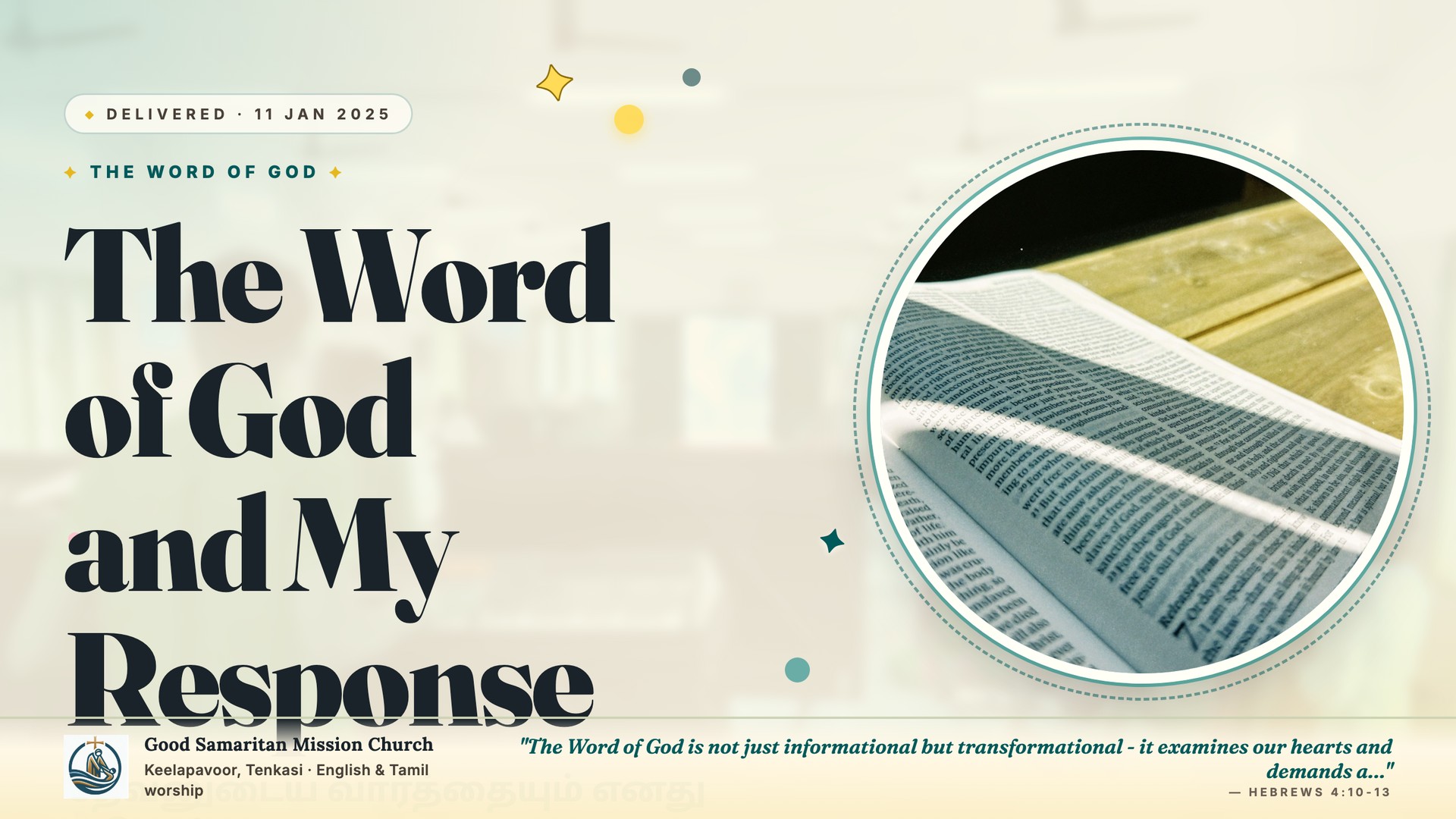
 The Word of God
The Word of God and My Response
தேவனுடைய வார்த்தையும் எனது பதிலும்
The Word of God is not just informational but transformational - it examines our hearts and demands a response of faith and obedience.
தேவனுடைய வார்த்தை வெறும் தகவல் மட்டுமல்ல, மாற்றுதலும் கூட - அது நமது இருதயங்களை ஆராய்ந்து விசுவாசம் மற்றும் கீழ்ப்படிதலின் பதிலைக் கோருகிறது.
Hebrews 4:10-13 +1 more
Introduction (அறிமுகம்)
What qualifies a believer to do good work? The answer lies in the transformative power of God's Word. Scripture serves three essential functions in our spiritual formation:
- Shows you what sin is in your life (conviction - கடிந்துகொள்ளுதலுக்கும்)
- Corrects you and reconciles you with God (correction - சீர்திருத்தலுக்கும்)
- Helps you live a life with integrity and moral courage, doing God's will (training in righteousness - நீதியைப் படிப்பிக்குதலுக்கும்)
The result is profound: you become complete and proficient (தேறினவனாக), thoroughly equipped for every good work (எந்த நற்கிரியையுஞ்செய்யத் தகுதியுள்ளவனாக), as promised in 2 Timothy 3:16-17.
Before examining what God expects from us, we must first understand what the Word of God accomplishes in our lives.
What the Word of God Does (தேவனுடைய வார்த்தை என்ன செய்கிறது)
"For the word of God is living and powerful, and sharper than any two-edged sword, piercing even to the division of soul and spirit, and of joints and marrow, and is a discerner of the thoughts and intents of the heart. And there is no creature hidden from His sight, but all things are naked and open to the eyes of Him to whom we must give account." - Hebrews 4:12-13 (NKJV)
"தேவனுடைய வார்த்தையானது ஜீவனும் வல்லமையும் உள்ளதாயும், இருபுறமும் கருக்குள்ள எந்தப் பட்டயத்திலும் கருக்கானதாயும், ஆத்துமாவையும், ஆவியையும், கணுக்களையும் ஊனையும் பிரிக்கத்தக்கதாக உருவக் குத்துகிறதாயும், இருதயத்தின் நினைவுகளையும் யோசனைகளையும் வகையறுக்கிறதாயும் இருக்கிறது. அவருடைய பார்வைக்கு மறைவான சிருஷ்டி ஒன்றுமில்லை; சகலமும் அவருடைய கண்களுக்குமுன்பாக நிர்வாணமாயும் வெளியரங்கமாயுமிருக்கிறது, அவருக்கே நாம் கணக்கு ஒப்புவிக்கவேண்டும்." - எபிரெயர் 4:12-13 (TAOVBSI)
At first glance, this passage appears inspirational, but deeper examination reveals its profound implications:
- The Word of God is living - it is not confined to historical documents but actively works today
- The Word of God is powerful - it is not passive suggestion but divine authority
- The Word of God is sharp - it cuts through deception rather than merely comforting
- The Word of God divides - it separates the spiritual from the soulish
- The Word of God discerns - it judges the hidden thoughts and intentions of our hearts
- Nothing remains hidden - we must ultimately give account to God
However, this verse does not stand in isolation. Scripture places it here with intentional purpose.
The Word "For" - This Is a Warning, Not Information ("ஏனெனில்" - இது எச்சரிக்கை, தகவல் அல்ல)
The opening word "For" (ஏனெனில்) indicates causation, not introduction of new information. This conjunction means "because" and provides the reason for a previous statement. Verse 12 explains why the warning in verse 11 must be taken seriously.
The Word of God receives detailed description here because God is issuing a warning about our response to His truth.
Diligence vs Disobedience (ஜாக்கிரதை எதிர் கீழ்ப்படியாமை)
"Let us therefore be diligent to enter that rest, lest anyone fall according to the same example of disobedience." - Hebrews 4:11 (NKJV)
"ஆகையால், அந்தத் திருஷ்டாந்தத்தின்படி, ஒருவனாகிலும் கீழ்ப்படியாமையினாலே விழுந்துபோகாதபடிக்கு, நாம் இந்த இளைப்பாறுதலில் பிரவேசிக்க ஜாக்கிரதையாயிருக்கக்கடவோம்." - எபிரெயர் 4:11 (TAOVBSI)
The word "therefore" (ஆகையால்) signals a conclusion drawn from previous truths. This verse establishes several crucial realities:
- Diligence is required for spiritual progress
- Spiritual falling remains a genuine possibility
- The primary danger is disobedience, not insufficient knowledge
God's message becomes clear: Be diligent because My Word will examine your heart. Exercise caution because My Word will expose any disobedience lurking within.
The Word of God does not fail people; rather, people fail to respond appropriately to the Word.
The Promised Rest (வாக்குப்பண்ணப்பட்ட இளைப்பாறுதல்)
"For he who has entered His rest has himself also ceased from his works as God did from His." - Hebrews 4:10 (NKJV)
"ஏனெனில், அவருடைய இளைப்பாறுதலில் பிரவேசித்தவன், தேவன் தம்முடைய கிரியைகளை முடித்து ஓய்ந்ததுபோல, தானும் தன் கிரியைகளை முடித்து ஓய்ந்திருப்பான்." - எபிரெயர் 4:10 (TAOVBSI)
God's rest represents both a present reality and an available promise. This rest remains accessible to believers today. Entering His rest involves:
- Ceasing from self-dependent effort
- Trusting in God's completed work
- Walking in faithful obedience rather than anxious striving
The three verses create a logical progression: Because God's rest still remains available (verse 10), believers must pursue it with diligence (verse 11), for God's Word will ultimately judge the authenticity of our response (verses 12-13).
Why Hebrews 4:12-13 Is a Warning (எபிரெயர் 4:12-13 ஏன் ஒரு எச்சரிக்கை)
Hebrews 4:12-13 serves not as inspirational information about Scripture's power, but as a sobering warning against careless response to God's Word.
Believers cannot approach Scripture casually through:
- Ignoring its commands
- Reading without genuine engagement
- Inwardly resisting its convictions
- Hearing without corresponding obedience
The Word will accomplish its divine purpose regardless of our response - either leading surrendered hearts into rest or exposing the reasons why resistant hearts refuse God's invitation.
The Word of God remains powerful whether we submit to it or not, but only submission leads to the promised rest.
Application (செயல்படுத்துதல்)
Our responsibility involves not increased striving but appropriate response - listening with faith, believing God's promises, and walking in obedience. God's rest remains available, but His Word will not overlook patterns of disobedience.
Three key principles emerge:
- Rest is promised, diligence is required, and the Word will judge our response
- Hearing Scripture without faithful response proves insufficient
- The Word of God does not fail people; people fail to respond to the Word
The choice before every believer remains clear: Will we receive God's Word with the reverence and obedience it demands, entering into His rest, or will we resist its penetrating work and miss the blessing He offers?
Keep reading
Scroll through the full sermon to mark it as read.
Reflect on This Sermon
- 1.What is one thing from this sermon that spoke to you personally?
- 2.How can you apply this message in your daily life this week?
- 3.Is there a verse from this sermon you want to memorize?
Scriptures in This Sermon
More in “The Word of God”